Invited Speakers – 2026
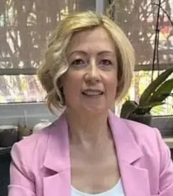
Nermin DEMIRKOL
Associate Professor PhD
Department of Ceramics, Faculty of Fine Arts, Kocaeli University, TURKIYE
Nermin Demirkol received her B.Sc. degree from Dumlupınar University as a ceramic engineer, Türkiye in 2001, and M.Sc. degree from Gebze Institute of Technology, Türkiye in 2004 and Ph.D. degree from the İstanbul Technical University (ITU), Türkiye in 2013. Since 2004, Demirkol has presented and published papers on the production and characterization of ceramic materials in many countries including Belgium, Germany, USA, Japan, Spain, France, England, Sweden, Romania, China, Greece, Hungary. She has many publications in SCI. In 2011, she received a scientific achievement award from Kocaeli University for her SCI publications. In 2014, her biography was published among the World Successful Scientists by the Marquis Who’s Who Publication Board in the UK. In 2015, she was listed among the TOP 100 Engineers by the biography center in the UK. She is a board member of Biomaterials and Tissue Engineering Society (BTES) and Clay Sciences Society, member of Turkish Ceramic Society, European Ceramic Society ECerS, Turkish Electron Microscopy Society, International Society for Ceramics in Medicine ISCM and European Society for Biomaterials (ESB). She served as chair, organizing board and scientific board member in many international symposiums and congresses. She continues her studies on the production and characterization of traditional ceramics, bioceramic composites, 3D printing technology, reuse of waste materials in ceramic material production and ceramic glazes. She is involved in many national and international projects as an executive and researcher. She is an Associate Professor at Kocaeli University, Faculty of Fine Arts, Department of Ceramics.
*
* *
THE CIRCULAR RAW MATERIAL POTENTIAL OF IZMIT GULF BOTTOM SEDIMENT : CERAMICS, GLASS AND ENAMEL APPLICATIONS
Seabed sediments accumulated due to industrial activities and urban pressures represent not only environmental risks but also a significant potential as secondary raw materials. This invited talk addresses the potential of İzmit Gulf bottom sediments as substitute raw materials for ceramic, glass, and enamel applications within a circular economy framework. Mineralogical and chemical characterization of the sediments reveals the presence of clays, silica, feldspars, and various metal oxides, indicating their functional potential in ceramic bodies, glass formulations, and enamel coatings. The talk discusses the shaping behavior, firing performance, and mechanical properties of sediment-based ceramic compositions, as well as melting behavior, coloration, and surface characteristics in glass and enamel systems. Overall, the findings demonstrate that İzmit Gulf bottom sediments can be transformed into value-added advanced materials through appropriate pre-treatment and formulation strategies, contributing both to environmental burden reduction and the development of local circular raw material supply chains.
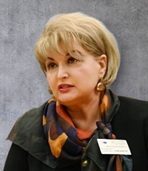
Anca Daniela RAICIU
Associate Professor PhD Pharm
Faculty of Pharmacy Titu Maiorescu University, Bucharest, ROMANIA
Assoc. Prof. PhD Pharm. Anca Daniela Raiciu, chemist and pharmacist, is a tenured faculty member at the Faculty of Pharmacy, Titu Maiorescu University, where she teaches courses in pharmacognosy, phytochemistry, phytotherapy, dermatopharmacy, cosmetology, pharmaceutical marketing and management, as well as ethics and academic integrity. She holds a PhD in Pharmaceutical Sciences and has an outstanding academic and research activity, being the author of numerous scientific papers in the fields of pharmacognosy and phytotherapy. She has participated in multiple national and international conferences and has supervised 89 undergraduate theses in her areas of expertise. She is the author of several invention patents and has been responsible for numerous research projects in the field of natural products and medicinal plants. Professionally, she serves as Logistics & Sales Director at Hofigal Export-Import S.A. and is President of the Planta Romanica Employers’ Association. She is also a member of the Technical Committee for Medicinal and Aromatic Plants and Beekeeping Products within the Ministry of Agriculture and Rural Development (MADR). She has completed hospital management training and is a TÜV-certified GMP auditor, actively contributing to quality assurance standards in the pharmaceutical field. She is also involved in scientific editorial activity, serving as Guest Editor for the journal Gels (MDPI).
*
* *
LIPOSOMAL MICROBIAL INULINASE FOR CONTROLLED RELEASE AND METABOLIC HEALTH APPLICATIONS
Advanced liposomal nanosystems incorporating microbial inulinase are increasingly investigated as innovative platforms for the prevention and management of metabolic disorders. Inulinase (EC 3.2.1.7) catalyzes the hydrolysis of β-2,1 fructan linkages in inulin, yielding fructose and fructooligosaccharides with recognized prebiotic and metabolic benefits. Microbial sources such as Kluyveromyces, Aspergillus, and Penicillium demonstrate high enzymatic efficiency under optimized fermentation conditions, influenced by parameters including aeration, agitation, and substrate composition. Recent advances in pharmaceutical nanotechnology highlight liposomes and hydrogels as complementary delivery systems capable of improving the stability, bioavailability, and controlled release of bioactive compounds for metabolic disease therapy. Hybrid liposome–hydrogel platforms further enhance intestinal permeability, reduce burst release, and increase systemic exposure of encapsulated bioactives. The convergence of enzymatic biotechnology and nanostructured delivery systems thus represents a promising strategy for the development of functional nutraceuticals targeting metabolic balance and enabling personalized therapeutic interventions.