Keynote Speakers 2026

Julietta V. RAU
Director of Research
Institute of the Structure of Matter,
Italian National Research Council, Rome, ITALY
Dr. Rau is the Director of Research, head of the laboratory and research group at the Italian National Research Council. She is the author of more than 250 articles in International Journals, about 180 presentations and 45 Invited, Plenary and Keynote talks at International Conferences, and 3 International Patents. Her present H-index is 48 (Citations about 7 000). She received several International Awards for her research achievements. She is the CHAIR and organizer of the biennial BioMaH “Biomaterials for Healthcare” International Conference (https://biomah.ism.cnr.it) and the Member of the International Scientific Committees of various International Conferences in the field of Materials Science, Nanoscience, Biomaterials and Medical devices. She is Ambassador for Italy at the European Orthopaedic Research Society. She is Honorary Member of the Romanian Society for Biomaterials. She is currently Associate Editor of the Bioactive Materials journal and FRONTIES in Biomaterials Science. Her present research interests regard innovative biomaterials for regenerative medicine, tissue engineering, orthopaedics and dentistry. She is developing also antibacterial surfaces for orthopaedic and dental implants.
*
* *
ANTIMICROBIAL SOLUTIONS FOR BIOMATERIALS AND SURFACES
Biofilm formation on implant surfaces is the primary pathogenic mechanism, protecting bacteria from host defenses and antibiotics. Conventional approaches such as antibiotic-loaded cements, spacers, and beads can deliver high local drug concentrations but are limited by poor release control, inadequate biofilm penetration, and lack of biodegradability, underscoring the need for improved strategies. Recent advances in biomaterials research provide promising alternatives, including multifunctional biomimetic materials, bioresorbable metal alloys, and nanocomposites capable of controlled antimicrobial ion release. Coated Mg- or Zn-based alloys combine antibacterial activity with gradual degradation and suitable mechanical properties, while biomimetic scaffolds and antibacterial calcium phosphate coatings can both reduce bacterial adhesion and support osteogenesis and vascularization. Overall, multifunctional biomaterials that integrate infection control with tissue regeneration and significantly improve long-term implant success.
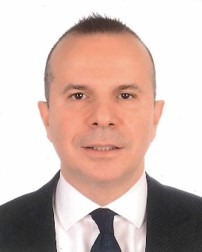
Gultekin GOLLER
Professor
Department of Metallurgical and Material Engineering Faculty of Chemistry-Metallurgy
Istanbul Technical University, TURKEY
Prof. Dr. Gultekin Goller is a Materials Science Professor in the Department of Metallurgical and Materials Engineering at the Istanbul Technical University, Turkey. He is the founder of Spark Plasma Sintering Laboratories, Biomaterials Research and Characterization Laboratory, Laser Cutting and Welding Laboratory, and Composite Material Production Laboratory in Istanbul Technical University’s Metallurgy and Materials Engineering Department. Co-author of 132 scientific articles, 5 book chapters, and 1 international book with over 2,750 citations reported by WoS (H-index 30) as of February 2026. He has supervised 11 completed and 2 ongoing PhD studies; 36 completed, 2 ongoing graduate studies. He is a member of the International Editorial Board of some journals and a reviewer for different journals. Prof. Goller is honoured with the “Doctor Honoris Causa” title in material science from Politehnica University of Bucharest in 2022, and he was also awarded the “Pro Scientia et Innovatio” Honorary Order of Romania Inventory Forum in 2023. He has honory membership to the Romanian Biomaterials Society and also serves to Romania Higher Education Accreditation Council (ARACIS) as an international expert. Prof. Göller has been included in the list of the most influential scientists (top 2%) carried out by Stanford University, based on the calculation of citation numbers, H-index values, co-authorships, and career-long impact factors of scientists, as of 2021. His research interests are in the field of metallurgical & material engineering, especially ceramic-based composite materials, thermal barrier coatings, high-entropy alloys, biomaterials, and refractory materials. His main activities relating to these topics are focused on the spark plasma sintering, plasma coating, and materials characterization by X-ray diffraction and electron microscopic techniques.
*
* *
ENHANCED RADIATION SHIELDING IN SPS-PROCESSED B₄C CERAMICS THROUGH HIGH-ENTROPY ALLOY ADDITIONS
Boron carbide (B₄C) is one of the most critical structural ceramics for extreme environments, combining exceptional hardness, low density, chemical stability, and strong neutron absorption capability. These attributes make B₄C highly attractive for lightweight armor and nuclear shielding applications; however, insufficient densification and intrinsically low fracture toughness continue to limit its broader structural utilization. This talk presents an approach to overcome these limitations through the incorporation of an equiatomic FeNiCoCrMo high-entropy alloy (HEA) as a multifunctional sintering aid for B₄C, followed by consolidation via spark plasma sintering. Various microstructural, phase, and mechanical characterization techniques were employed, and neutron shielding performance was evaluated experimentally at the ITU TRIGA Mark-II reactor using a Pu–Be source. In addition, Monte Carlo simulations (Geant4) based on experimentally determined densities and geometries are discussed to further elucidate radiation attenuation behavior. The results demonstrate that HEA incorporation significantly improves densification, mechanical integrity, and neutron attenuation efficiency, revealing a synergistic pathway that integrates compositional complexity, advanced sintering, and physics-based modeling. Overall, this talk highlights HEA-assisted B₄C ceramics as a promising platform for next-generation lightweight radiation-shielding systems relevant to nuclear energy and defense technologies.

Mohd Firdaus Bin OMAR
Associate Professor
Faculty of Chemical Engineering & Technology, Universiti Malaysi Perlis, Malaysia
Assoc. Prof. Ir. Ts. Dr. Mohd Firdaus bin Omar is Dean of the Faculty of Chemical Engineering and Technology at Universiti Malaysia Perlis (UniMAP), Malaysia, and a Chartered Engineer (C.Eng MIMMM). He obtained his PhD in Engineering (Polymer Composites) from Universiti Sains Malaysia, after completing his undergraduate and master’s studies in Materials Engineering at the same institution. His research expertise lies in polymer science and composite materials, with a strong focus on static and dynamic mechanical behavior, strain-rate sensitivity, and structure–property relationships of polymeric, hybrid, and nanocomposite systems.
He has published extensively in high-impact international journals, with more than 140 publications indexed in Google Scholar and 99 Scopus-indexed articles, achieving over 3,500 citations and an H-index of 25. Dr. Omar has led and participated in numerous competitively funded national research projects, contributing to advancements in sustainable composites, conductive polymers, advanced fillers, and multifunctional materials. In parallel with his research activity, he has held several senior academic and administrative positions, serves as a UniMAP Senate member, and is actively engaged in international collaborations, editorial activities, and professional engineering organizations.
*
* *
ELUCIDATING THE DYNAMIC MOLECULAR INTERACTIONS OF METAL-ORGANIC FRAMEWORKS (MOFs)-REINFORCED POLYMER NANOCOMPOSITES
The demand for polymer-based nanocomposite-reinforced nanoporous materials is becoming increasingly important in sustainable development studies. Integrating nanoporous materials such as metal–organic frameworks (MOFs) into polymer matrices is essential for the development of sustainable advanced materials. Combining MOFs with polymer matrices can produce hybrid materials with improved mechanical strength and stability compared to their individual constituents. This study aims to elucidate the effect of synthesised UiO-66 nanoparticles incorporated into a polyurethane (PU) matrix on the resulting hybrid materials’ microstructural mechanical properties and adsorption properties. UiO-66 nanoparticles were synthesised at 120 °C, 130 °C, and 140 °C. The nanoparticles and the resulting nanocomposites were characterised using X-ray diffraction (XRD), Fourier transform infrared spectroscopy (FTIR), Brunauer–Emmett–Teller (BET) analysis, and field emission scanning electron microscopy (FE-SEM). The experimental findings indicate that UiO-66 nanoparticles synthesised at 130 °C exhibited a highly desirable crystal structure and effective adsorption properties; therefore, nanoparticles synthesised at this temperature were selected to reinforce PU, forming a polymer–MOF nanocomposite. The mechanical properties of the resulting nanocomposites were evaluated using tensile and nanoindentation tests. UiO-66 nanoparticles were incorporated into the PU matrix at various weight percentages (10 wt.%, 20 wt.%, 30 wt.%, and 40 wt.%) via the solution casting technique. The results indicate that the polymer nanocomposite containing 30 wt.% UiO-66 exhibited the best mechanical performance, while loadings beyond 30 wt.% were more likely to result in nanoparticle agglomeration and brittle behaviour. The intricate interplay between MOF fillers and polymer matrices governs the structure-property relationship of the resulting polymer nanocomposites, which is crucial for tailored material design. Investigating the iodine capture analysis and dye removal capabilities of PU/MOFs, UiO-66/PU emerges as the top-performing nanocomposite. This enhancement is attributed to the unique properties of UiO-66 MOF and its well-distributed pore sizes. Adsorption mechanisms, driven by Van der Waals forces, π-π interactions, and hydrogen bonds, facilitate the binding of iodine and dyes to the nanocomposite surface. This research signifies a step toward environmentally sustainable material synthesis using MOFs, offering potential applications in energy storage and contributing to improved environmental conditions. Furthermore, it lays the groundwork for resilient rubbery-MOF nanocomposite systems suitable for real-world applications.