Keynote Speakers 2026
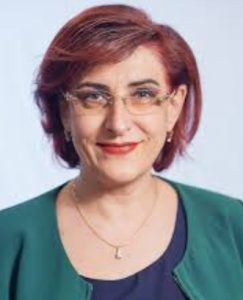
Norina Consuela FORNA
Professor
Faculty of Medicine and Pharmacy, Grigore T. Popa University of Medicine and Pharmacy, Iasi, Romania
Forna Norina is currently a Full Professor, and Ph.D. on. Faculty of Medicine and Pharmacy, University of Medicine and Pharmacy „Grigore T.Popa” din Iasi (Romania). Professor Norina Forna conducts advanced research in the fields of dental prosthetics, complex oral rehabilitation, and implantology. She is actively involved in related research activities as a coordinator, member of scientific committees for international conferences, reviewer for specialized journals, and leader within global scientific societies. She has served as President of the European Prosthodontic Association (EPA) and currently holds the position of President of the Romanian Society for Oral Rehabilitation (ASRO) and the Romanian Dental Association for Education (ADRE). She is also a full member of the Academy of Medical Sciences and the Academy of Romanian Scientists.
*
* *
ADVANCED BIOMATERIALS IN IMPLANT-PROSTHETIC THERAPY:
INNOVATIONS AND CLINICAL IMPLICATIONS
Recent developments in biomaterial science have significantly increased the predictability of implant-supported rehabilitations. High-strength ceramics such as zirconia, surface-modified titanium, bioactive coatings, and hybrid composite materials contribute to improved osseointegration, mechanical resistance, and aesthetic outcomes. Particular attention is given to the interaction between biomaterials and peri-implant tissues, including aspects related to biocompatibility, surface micro- and nanotopography, and bacterial adhesion. The integration of digital workflows, including CAD/CAM technologies, enables precise fabrication of customized prosthetic components using advanced materials adapted to individual clinical scenarios. Key clinical considerations such as load distribution, wear resistance, and soft tissue stability are closely linked to material selection. In addition, emerging directions—such as nanostructured surfaces, biofunctionalization, and smart biomaterials—are analyzed for their potential to enhance tissue regeneration and reduce biological and mechanical complications. Evidence from recent clinical studies supports the development of optimized treatment protocols based on advanced biomaterials. In conclusion, the selection and appropriate use of advanced biomaterials remain essential for achieving functional, aesthetic, and long-term success in implant-prosthetic rehabilitation.
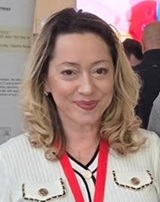
Cristina-Ileana COVALIU-MIERLA
Professor
Faculty of Biotechnichal Systems Engineering, National University of Science and Technology POLITEHNICA Bucharest
Professor Cristina-Ileana Covaliu-Mierlă, PhD, at the National University of Science and Technology POLITEHNICA Bucharest, with a distinguished activity in the field of environmental engineering and biotechnologies. She currently serves as Director of the Doctoral School of Biotechnical Systems Engineering, playing a key role in coordinating doctoral programs and ensuring the quality of education and research processes. Scientifically, she has developed a strong research profile in wastewater treatment, nanomaterials, and sustainable technologies, being the author and co-author of more than 100 ISI scientific papers published in prestigious journals, as well as specialized books. Her contributions have been recognized through multiple awards and medals obtained at international invention exhibitions. She has coordinated, till the present, three knowledge transfer projects with industry partners (Pilot flotation plant using eco-friendly hybrid nanomaterials for wastewater treatment, Installation for removal of organic pollutants from wastewater using photocatalysis and biological processes, two SEE-funded projects, and one project aimed at supporting early-stage doctoral researchers.
*
* *
NANOTECHNOLOGIES AND NANOMATERIALS WITH POTENTIAL APPLICATIONS IN INDUSTRIAL WASTEWATER TREATMENT
The removal of pollutants from wastewater to prevent their release into the environment has been extensively studied. Various types of nanomaterials with potential for removing toxic contaminants, such as heavy metals and pharmaceuticals, from wastewater are still studied. The materials discussed include carbon nanotubes, zeolites, magnetic oxides, hybrid nanomaterials, and composite materials. Furthermore, the correlation between material properties and their performance in wastewater treatment technologies is highlighted. Nanomaterials have the ability to function either as adsorbents, flotation adjuvants, or as catalysts in industrial wastewater treatment technologies.The performance of these nanomaterials was systematically investigated from the perspective of adsorption or catalys kinetics.
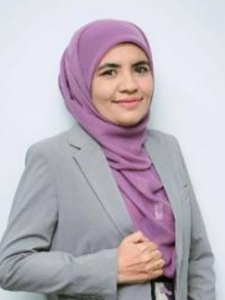
Suriani MAT JUSOH
Associate Professor Dr. Eng.
Head of Programme, Maritime Technology and Naval Architecture
Faculty of Ocean Engineering Technology, Universiti Malaysia Teregganu, MALAYSIA
M.J. Suriani is an Associate Professor of composite materials at Universiti Malaysia Terengganu (UMT), Terengganu, MALAYSIA. She had graduated from Universiti Putra Malaysia (UPM), Selangor, MALAYSIA with Bachelor of Engineering (2001), MSc (2007) and PhD in Materials Engineering (2012) respectively. Her research interests include natural fibre composites, delamination and manufacturing defect, hybrid composites, materials selection, and natural inhibitor for corrosion prevention. To date she has authored or co-authored of publications in international journals, chapters in books and conference proceedings focusing on delamination and manufacturing defects of natural fibre composites. She registered as Professional Engineer (Ir.) to Malaysia Board of Engineer (BEM) and also Professional Technologist to Malaysian Board of Technologist (MBOT). Dr. Suriani is a professional academician with an excellent track record in teaching and supervision She possesses 20 years teaching experiences and very knowledgeable in using multiple approaches and techniques to enhance the teaching and learning activities, particularly the 21st Century Classroom and towards IR 4.0 education. She has also been nominated as an excellence lecturer, and in 2017 and 2019, she was the recipient for An Excellent Teaching and Learning Award (Engineering & Technology Cluster) at UMT. Dr. Suriani also actively participated in the innovation competition and exhibition. She had nominated for gold Medal recipient and Special Award for previous innovation and exhibition in 2013 to 2025. She has also appointed as a reviewer for Scopus indexed journals with Q1 quartile and conferences and acted as the Content Editor for UMT Journal of Undergraduate Research (UMT Jur) since 2018. She is an active researcher in her area of expertise and has completed the research grant as a leader and co-researcher.
*
* *
DEVELOPMENT OF GREEN HYBRID COMPOSITE AUTONOMOUS SURFACE VEHICLE SEARCHING BOAT
Environmental emergency awareness has been gaining momentum in recent years in the composite manufacturing industry especially in composite boat industry, with a new generation of composite materials as Woven Kenaf Hybrid composite minimizing their harmful environmental impacts by employing more sustainable manufacturing processes and, where possible, replacing synthetic materials with more sustainable bio-based materials, thus more efficiently using energy and material resources. As today, composite boat industry facing with issue towards practicing green manufacturing technology, thus by proposing an alternative materials and locally green materials from Kenaf fibre had been solved huge issues on replacing synthetic materials which is non-biodegradable and costly in composite boat industry. Also, our world is facing escalating environmental challenges, including climate change and its impact on river ecosystems. These challenges demand innovative approaches to monitoring, data collection, and analysis. Traditional methods of environmental study and data collection are often limited in scope, expensive, and can be hazardous in certain conditions. ASVs, with their autonomous capabilities, can revolutionize this field by providing persistent, cost-effective, and safe platforms for environmental data collection. In developing a local prototype of an Unmanned Surface Vehicle (USV), this research stated several potentials and its purposes. It can be state further that this project aims to bridge the gap between technological advancement and local environmental stewardship via utilization of Woven Kenaf hybrid composite, offering a tool that not only contributes to the global understanding of climate change and water-based/aquatic environments but also demonstrates the potential of ASV technology beyond military and maritime applications. The proposed boat equipped with autonomous technology replacing current application by eliminate human error, reduce crewing costs, increase the safety of life, and allow for more efficient use of space in ship design and efficient use of fuel. Therefore, this study is proposed with three (3) objectives as to build a high-speed hybrid composite Woven Kenaf boat hull, to construct an Autonomous Surface Vehicle system prototype and to evaluate the ASV system integration with a high-speed hybrid composite Woven Kenaf boat hull performance.